NegOcc state college poised to become university soon

BACOLOD CITY — The Carlos Hilado Memorial State College (CHMSC) in Negros Occidental is expected to become a university soon after the Senate approved on third and final reading the bill for its status conversion.

House Bill 8732 seeks to convert the CHMSC, with a main campus in Talisay City and satellite campuses in Bacolod City and Binalbagan town, into a state university.

Bacolod City Lone District Rep. Greg Gasataya, one of the main authors of the bill, said on Wednesday that after the Senate’s approval on Monday, the proposed law will be forwarded to the Office of the President for the signature of President Rodrigo Duterte.
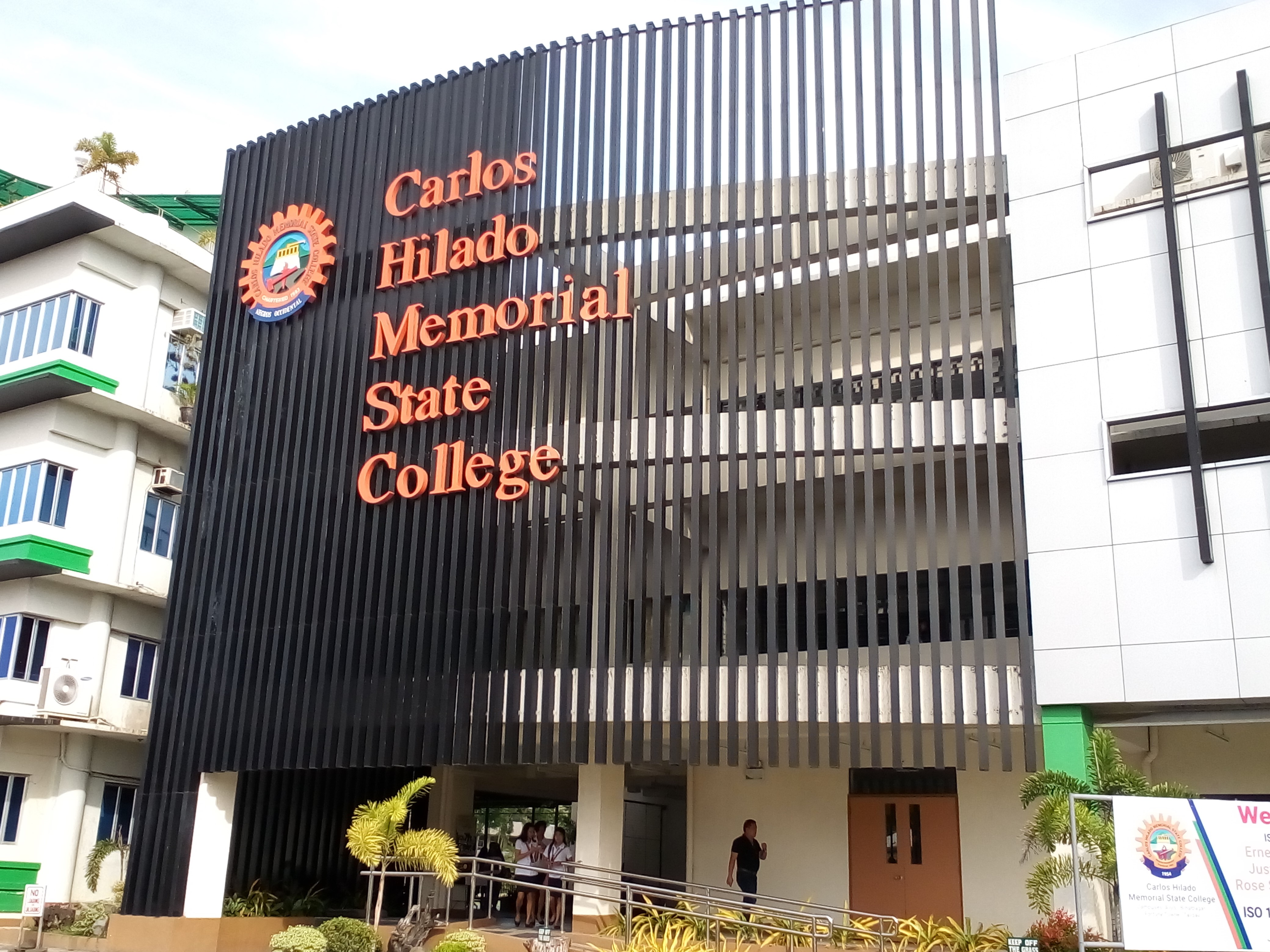

The Carlos Hilado Memorial State College (CHMSC) main campus in Talisay City, Negros Occidental.
Photo by Nanette L. Guadalquiver

Gasataya added that once it will obtain a university status, the CHMSC will be able to establish more facilities and offer additional academic programs.

Among the co-authors of the House Bill 8732 are (3rd District) Rep. Alfredo Benitez and (5th District) Rep. Alejandro Mirasol, whose jurisdictions include Talisay City and Binalbagan town, respectively.

CHMSC has almost 10,000 students in its four campuses, including the main college in Talisay City in northern Negros as well as the two in Bacolod City situated in Alijis and Fortune Towne, and another in Binalbagan in southern Negros.

Dr. Renato Sorolla, president of CHMSC, said in an interview last week he is optimistic that they will obtain the university status within the year.

“We are nearer to the goal. We still need to submit more documents to comply with the requirements of the Commission on Higher Education,” he said.

Sorolla said that becoming a state university is not just an aspiration for the CHMSC, but also an opportunity for them to become more responsive to the community that it serves and uplift the quality of services they deliver as an educational institution.

“It will change the budget because the emphasis of the university is more on the generation of new knowledge. With that, we will invest much on the improvement of our research facilities,” he added.

Currently, CHMSC offers academic programs under the College of Education, College of Industrial Technology, and School of Arts and Sciences (all in Talisay City), College of Business Management and Accountancy (Fortune Towne), Institute of Information Technology (Alijis), and College of Fisheries and Criminology (Binalbagan). (PNA)

Source: http://www.pna.gov.ph/articles/1061137

Bacolod mayor’s party to form alliance with Hugpong ng Pagbabago

BACOLOD CITY — Grupo Progreso (GP), the political party of Mayor Evelio Leonardia, will form an alliance with the Davao-based regional party, Hugpong ng Pagbabago (HNP).

Leonardia announced this Tuesday night after his re-election bid was endorsed by Mayor Sara Duterte-Carpio, chairperson of HNP, during their meeting at the Davao City Hall on Sunday, February 3.

It’s a “big-time endorsement”, a GP statement said.


Davao City Mayor Sara Duterte-Carpio endorses the reelection bid of Bacolod City Mayor Evelio Leonardia during the latter’s courtesy call at the Davao City Hall on Feb. 3, 2019  Contributed photo

Duterte-Carpio raised Leonardia’s hand during his courtesy call and was witnessed by National Youth Commission chairman Ronald Cardema, as well as Sangguniang Kabataan officials from Cainta, Taytay, and Butuan and other guests.

Leonardia flew to Davao City to attend the two-day “Rehabinasyon: The 1st National Anti-Drugs Summit” organized by the Inter-Agency Committee Against Illegal Drugs (ICAD) on February 3 and 4.

He said the coalition between the Grupo Progreso and the HNP will be formalized in another meeting in Bacolod during the campaign period for the May 13 elections.

Leonardia added that he assured the Davao City mayor of the full support of Grupo Progreso for the senatorial candidates endorsed by HNP.

The HNP is also expected to support the reelection bids of Leonardia’s partymates Congressman Greg Gasataya and Vice Mayor El Cid Familiaran, and the Grupo Progreso’s 12 candidates for councilor.

Last October, Mayor Sara visited Bacolod during the highlights of the MassKara Festival and witnessed the schools’ street dance competition at the Bacolod Plaza.

She also took the opportunity to thank the people of Bacolod for supporting the administration of her father, President Rodrigo Duterte. (PNA)

Workers’ groups launch manifesto vs. sugar import liberalization

BACOLOD CITY — Three labor groups launched a manifesto expressing their opposition to the liberalization of sugar imports, a proposal that has been met with protests by sugar industry stakeholders in Negros Occidental since last month.

The position paper, titled “The Karga-Tapas Manifesto”, was signed by leaders of the General Alliance of Workers Associations (GAWA), Philippine Agricultural, Commercial and Industrial Workers Union -Trade Union Congress of the Philippines (Paciwu-TUCP), and National Congress and Unions in the Sugar Industry of the Philippines (NACUSIP) in a forum held at the Geocadin Building in this city on Monday.

Karga-Tapas is Hiligaynon for a farm worker whose job is to cut and haul sugarcane.


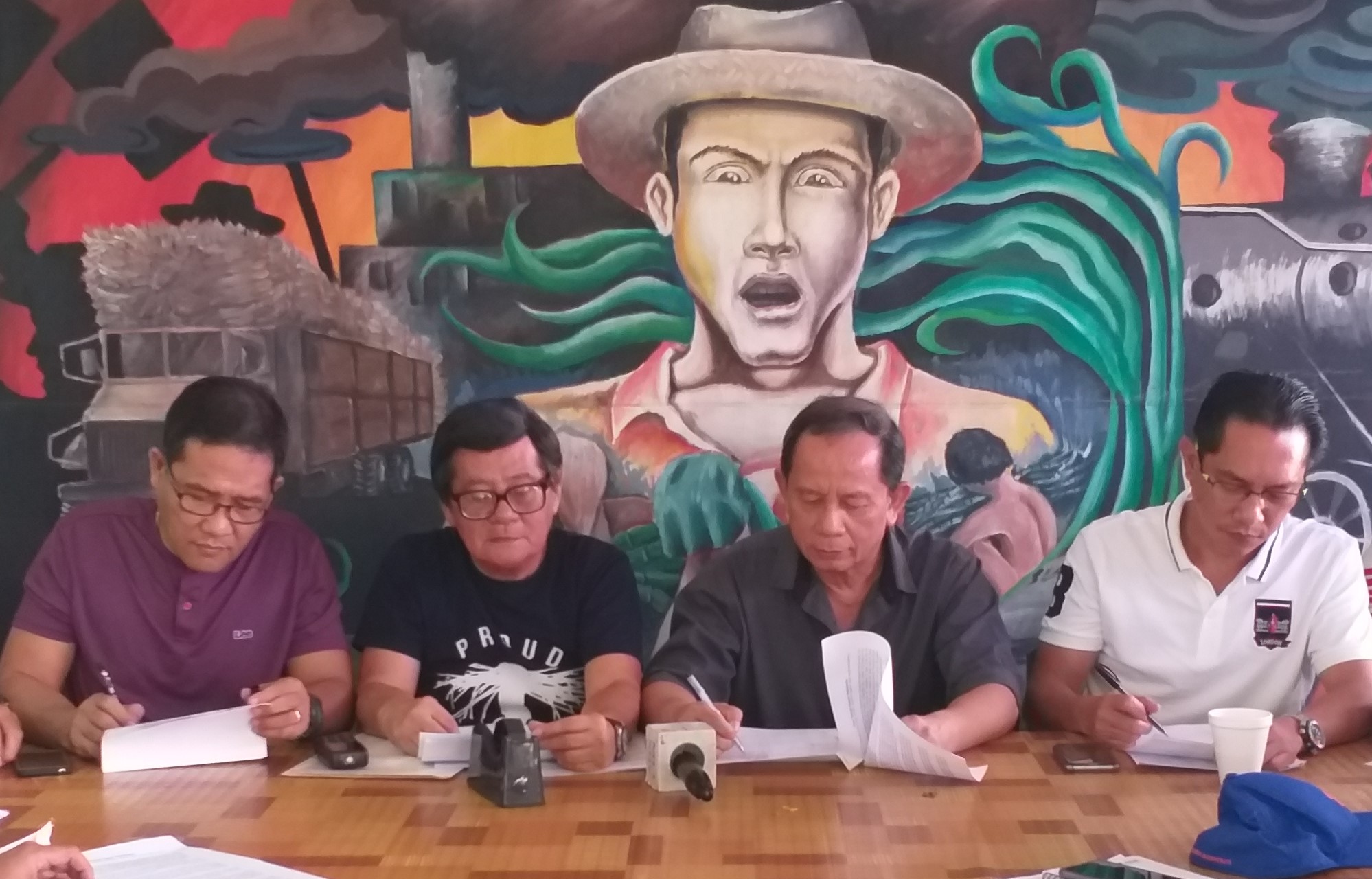
Wennie Sancho (2nd from left), secretary general of General Alliance of Workers Associations, and Hernane Braza, (2nd from right), national president of Philippine Agricultural, Commercial and Industrial Workers Union-Trade Union of Congress of the Philippines, lead the signing of the “The Karga-Tapas Manifesto” opposing the proposal to liberalize the importation of sugar in Bacolod City on Monday, Feb. 4, 2019.
Photo by Erwin P. Nicavera

“If this plan will materialize, it will obliterate our local industry that would result into severe economic dislocation of thousands of sugar farmers and workers. The economic disaster that would occur would be unparalleled in the history of our province,” the labor groups said in the manifesto.

Negros Occidental, considered the country’s sugar capital, produces close to 60 percent of the Philippines’ sugar output.

GAWA secretary general Wennie Sancho said the position paper is in reaction to the pronouncement of Budget Secretary Benjamin Diokno to “relax” the rules or deregulate the importation of sugar.

Sancho signed the manifesto together with Paciwu-TUCP national president Hernane Braza and NACUSIP national director Jun de la Cruz.

Both Sancho and Braza are also labor sector representatives to the Regional Tripartite Wages and Productivity Board – Western Visayas.

According to the labor groups, the economic managers need to consider the implications of the sugar import liberalization scheme, as it would come “at the cost of the economic well-being of the people.”

Copies of the manifesto will be furnished to Sugar Regulatory Administration chief Hermenegildo Serafica and two members of the Sugar Board, representing the planters and the millers, to be presented during the Sugar Summit in Manila on February 11.

Last week, Diokno said while the planned liberalization of sugar imports would negatively affect local producers, this would benefit a greater number of consumers.

“There are more consumers than sugar producers,” he told the Philippine News Agency (PNA).

The plan to import some 200,000 metric tons of sugar seeks to address the elevated domestic inflation rate, whose upticks last year was caused by supply-side factors, such as the lack of supply of rice, meat, and several agricultural products, Diokno said. (PNA)

Source: http://www.pna.gov.ph/articles/1061018

NegOcc releases P15.3-M for infra projects in 27 villages

BACOLOD CITY — The provincial government of Negros Occidental has released PHP15.3 million worth of funds for the construction of infrastructure projects in 27 villages in four local government units.

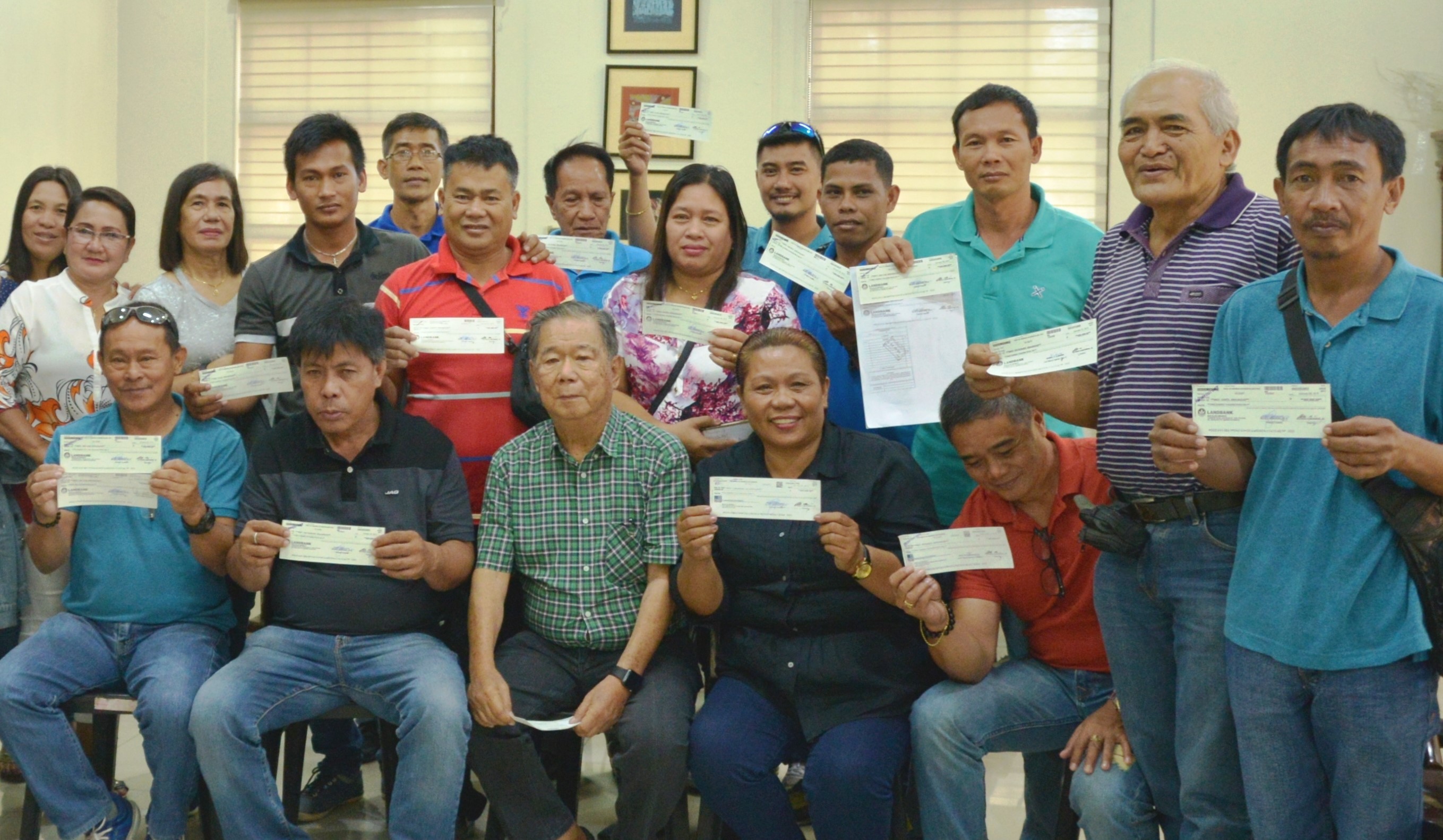
In a provincial report released Monday, the checks have been distributed by Governor Alfredo Marañon Jr. to authorized barangay officials and representatives.

Among the recipients are barangays Caliban and Zone 4 in Murcia town, which were granted PHP250,000 each for the concreting of barangay road and repair, and improvement of a concrete drainage system, respectively.

Barangay Camandag in La Castellana received PHP500,000 for the renovation of barangay hall.

Negros Occidental Governor Alfredo Marañon Jr. (seated, 3rd from left) with some of the recipient barangay officials and representatives who received their checks for the construction of various infrastructure projects in their respective villages on Feb. 1, 2019.
Photo courtesy of Capitol PIO

In Binalbagan town, 16 villages were provided PHP300,000 each for the implementation of various projects. The recipients are barangays Amontay, Bagroy, Bi-ao, Canmoros, Enclaro, Marina, Paglaum, Payao, Progreso, San Jose, Santol, San Teodoro, San Juan, Sto. Rosario, San Pedro and San Vicente.

Other recipients are eight villages in Sagay City, including Sewahon I, Rafaela Barrera, Puey, Malubon, Molocaboc, and Baviera, which were granted PHP1 million each for road concreting projects.

Barangay General Luna received PHP1 million for the rehabilitation of its multi-purpose building while Barangay Plaridel received PHP2.5 million for the concreting of barangay road.

Last January 3, the provincial government also turned over checks totaling PHP800,000 to barangays Payauan and Agboy in Candoni for the purchase of multi-purpose vehicles for each village.

In the first week of December, Candoni town was also given checks for a total of PHP2 million for various projects in its six barangays.

On December 18, a total of 13 villages in Isabela received PHP4.3 million in financial assistance from the provincial government for various projects.

The beneficiaries were Barangay 7 Poblacion, Barangay 8 Poblacion, Amin, Banogbanog, Cabcab, Cansalongon, Guintubhan, Limalima, Makilignit, Maytubig, Riverside, Sebucawan, and San Agustin.

The financial assistance were used for projects, such as the repair and improvement of water systems, hog dispersal, repair and improvement of water hand pump, agricultural inputs and purchase of farm equipment, and flood control. (PNA)

Source: http://www.pna.gov.ph/articles/1061033

Negros Occidental to pursue sorghum production

BACOLOD CITY — The provincial government of Negros Occidental is embarking on the production of sorghum this year, mainly as an alternative crop for silage and feeds.

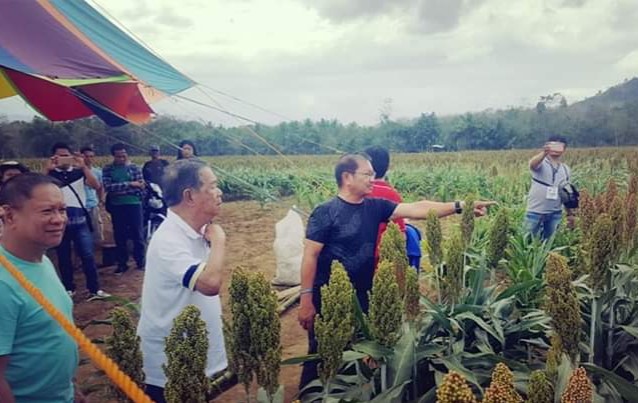
Provincial Agriculturist Japhet Masculino bared the plan on Sunday after he and Gov. Alfredo Marañon Jr. met with Agriculture Secretary Emmanuel Piñol in North Cotabato over the weekend.

Piñol has pushed for the production of sorghum in Negros Occidental when he toured the provincial officials at the sorghum model farm in Makilala town.


Agriculture Secretary Emmanuel Piñol (3rd from left) tours Negros Occidental Governor Alfredo Marañon Jr. (2nd from left) and Provincial Agriculturist Japhet Masculino (left) at the sorghum model farm in Makilala, North Cotabato on Saturday.
Contributed photo

Masculino said the agriculture chief told them that sorghum is a crop worth considering for two major benefits — income for the farmers from feeds and source of silage for livestock.

“Secretary Piñol assured that market is available for sorghum and he will provide Negros Occidental with hybrid seeds,” he said.

Masculino added that sorghum is promising as a feed ingredient and its production is very suitable for the province.

Sorghum, which can be rationed (to sprout or spring up from the root) three times in a year, is considered a versatile crop that can be grown as a grain, forage or sweet crop.

In Negros Occidental, there are some sorghum plantations producing the crop, primarily as sources of raw materials for bioethanol production.

Masculino said the Office of the Provincial Agriculturist will start the initiative on sorghum production this year.

“We have to set up a model farm at the earliest,” he added.

With the huge demand from the local livestock industry, the provincial government will venture into sorghum production – mainly for feeds and silage since Negros Occidental lacks feed ingredients which can be an alternative to corn.

Masculino said the provincial government is eyeing a 10-hectare portion of the Capitol-owned property at Paglaum Village in Barangay Mansilingan, Bacolod City as a model farm.

“It will be a province-led production initiative for the meantime. In terms of market, we can eventually tap our local feed producers,” he added. (PNA)

Source: http://www.pna.gov.ph/articles/1060911

Bacolod City renews support for ‘Rehabinasyon’

BACOLOD CITY — The City of Bacolod has renewed its commitment in supporting the national government’s campaign against illegal drugs through its participation in the two-day “Rehabinasyon: The 1st National Anti-Drugs Summit” at the Marco Polo Hotel in Davao City.

Mayor Evelio Leonardia, who is among the select mayors attending the event until January 4, said the summit is a rare opportunity that provides Bacolod with a holistic picture of the drug rehabilitation program of the administration.

“The leading anti-illegal drugs agencies have organized this to make a more comprehensive approach in their intention to rehabilitate and reintegrate the victims back to society,” said the mayor, who was joined in the summit by executive assistant Samuel Montoyo, the city’s focal person on the anti-drug abuse campaign.

In March last year, Bacolod hosted the launching of “Rehabinasyon,” a holistic approach in eliminating the country’s drugs problem that puts premium on the rehabilitation of drug surrenderers, which was attended by about 400 people.

Bacolod then was one of the first key cities selected by the Inter-Agency Committee on Anti-Illegal Drugs to launch the program.

The summit in Davao is attended by top officials of the Duterte administration and is showcasing #RealNumbers, #RealSolutions, and #RealStories.

Ramon Cualoping III, assistant secretary of the Presidential Communications Operations Office and chief brand integrator of Rehabinasyon, said the summit aims to provide a review of the government’s achievements for the past two years in solving the country’s drug problem.

He encouraged the stakeholders to continue supporting the campaign saying that Rehabinasyon is “an investment for the future.”

In Bacolod, the campaign against illegal drugs also includes the construction of a PHP35-million drug rehabilitation center in Barangay Alijis. The PHP10-million fund was granted by the Dangerous Drugs Board while the remaining PHP25-million will be shouldered by the city government.

The Philippine Drug Enforcement Agency has also selected Bacolod to be the site of the pilot center of “Balay Silangan” for the Visayas.

In July 2017, Bacolod was also the venue of the Philippine celebration of the International Day Against Drug Abuse and Illicit Trafficking joined by about 17,000 participants. (PNA)

Source: http://www.pna.gov.ph/articles/1060910

PH Philharmonic Orchestra belongs to the people: CCP head

BACOLOD CITY — The Cultural Center of the Philippines (CCP) reaches out to the Filipino audience by bringing music across the country through the outreach concerts of the Philippine PhilHarmonic Orchestra (PPO).

“It’s a two-way zone. We bring people to the center and since we know not all of them can go to the center, we bring the center to the people. That’s why we’re here,” CCP president Arsenio “Nick” Lizaso said.

Lizaso introduced the country’s leading symphony orchestra, a resident company of the CCP, during their two-night concert in the city on Thursday and Friday.


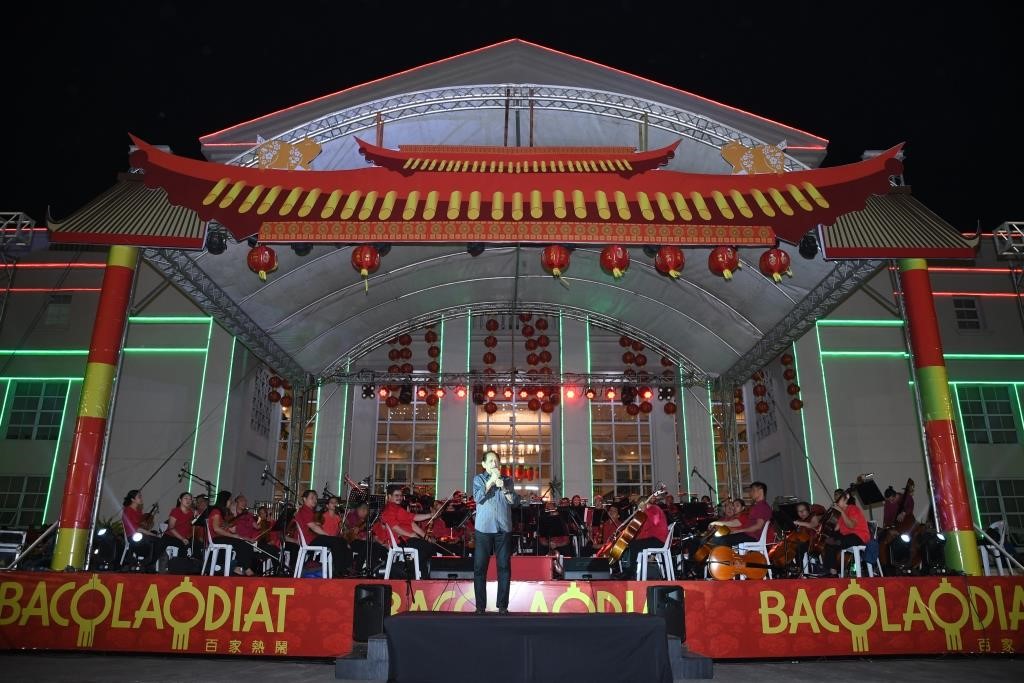
Cultural Center of the Philippines president Arsenio ‘Nick’ Lizaso speaks before the crowd at at the Bacolod Government Center grounds, where the Philippine PhilHarmonic Orchestra performed during the opening of the 2019 Bacolaodiat Festival on Friday night (Feb.1, 2019) Photo courtesy of Bacolod City PIO

On Thursday, the PPO performed at the SMX Convention Center and on Friday, the orchestra was featured during the opening night of the 2019 Bacolaodiat Festival at the Bacolod Government Center (BGC) grounds.

“The mandate of the CCP is to preserve and promote art in all regions of the country, and this is the reason why we are here tonight. The orchestra belongs to you. We are only the caretaker. We take care of them for you. This is why we bring the music of the PPO to you and to every city and region that we go to,” Lizaso said in his message before the crowd at the BGC on Friday.

“This is our mandate — to bring our music to the people,” he added.

The PPO’s outreach program primarily aims to “promote music appreciation in underserved communities in the different regions in the country.”

The PPO, under the baton of conductors Yoshikazu Fukumura and Herminigildo Ranera, is celebrating its 45th anniversary, which coincides with the orchestra’s 36th Concert Season.

Lizaso said that during the PPO’s concert in Iloilo City last year, Mayor Evelio Leonardia approached him and asked if the CCP can also bring the orchestra to Bacolod.

“Swiftly, I said yes. From thereon, we had a series of meetings and here we are in Bacolod,” he added. (PNA)

Source: http://www.pna.gov.ph/articles/1060838

Bacolaodiat Fest ‘makes us prouder’ of Bacolod City: mayor

BACOLOD CITY — Mayor Evelio Leonardia said the staging of the Bacoloadiat Festival, the city’s celebration of the Chinese New Year, makes the people of Bacolod prouder of the city.

“It is a morale booster for all of us. It makes us prouder of our city and makes us involved,” said Leonardia, who led the ceremonial lighting of the Bacolod Government Center on Friday night to officially open the festival’s 14th edition.

Bacolaodiat was coined from the words “Baco” for Bacolod and “Lao Diat,” a Fookien word for celebration. This year’s celebration is set from February 1 to 5.


. Bacolod City Mayor Evelio Leonardia (2nd from right), with Councilor Em Ang (2nd from left), and 2019 Bacolaodiat Festival chair Oddette Ong-Gomez (right), leads the ceremonial lighting of the Bacolod Government Center to officially open the 14th edition of the Bacolaodiat Festival on Friday night (Feb. 1, 2019).
Photo by Nanette L. Guadalquiver

The Lunar New Year will be celebrated on February 5, based on the traditional Chinese calendar, and 2019 will be the year of the Earth Pig.

The Bacolaodiat Festival, a brainchild of Leonardia himself, is being held at the Bacolod Government Center for the first time, and on opening night, the Philippine Philharmonic Orchestra (PPO) performed before thousands of Bacolodnons.

“Probably, this is the grandest opening ever. Just the mere presence of the Philippine Philharmonic Orchestra is something that makes this a cut above the rest,” the mayor said.

Leonardia said the presence of the PPO in Bacolaodiat is most symbolic for the city. “Having the Philharmonic Orchestra here reminds our people that if you look at the orchestra, it is a group of different musicians, different instruments, with different sounds and tempos, and yet because they are united, they have only one purpose. They play beautiful music together,” he said.

The mayor noted that what he wants to see in Bacolod is that while each resident is a different individual with different agenda, interest, and characteristics, still there is harmony and peace among them.

“If we can only join our hands together, if we can be like the Philharmonic, this city will move and accelerate to its highest heights,” he said.

Oddette Ong-Gomez, chair of the 2019 Bacolaodiat Festival, enjoined the people of Bacolod to take part in the festivity.

“The Bacolaodiat, Inc. is happy and proud to present to you the 14th Bacolaodiat Festival. We are equally happy for the strong support of the local government, as well as the cooperation of the Filipino-Chinese community,” she said during the opening program that followed the motorcade on Friday afternoon.

“We wish that this Year of the Pig brings good fortune and good health to everyone,” Ong-Gomez added.

The festival also features the Imperial Village, which is hosting various food stalls serving some Chinese cuisine, inasal, and lechon, as well as cooking demos and Asian arts and crafts.

On Saturday, the annual cultural show will be held at 6 p.m. to be followed by the performance of Manila-based Hokkien-style Chinese opera, Kao Ka, and the Lantern Dance Competition.

On Sunday, the Bacolaodiat Street Dance Competition will start at 3 p.m., while the Parade of Mascots, at 4 p.m.

At 4:30 p.m., the Lantern Dance Competition will move to the Goldenfield Commercial Complex. (PNA)

Source: http://www.pna.gov.ph/articles/1060832

NegOcc gets DA, DAR support amid sugar industry woes

BACOLOD CITY — The Department of Agriculture (DA) 6 (Western Visayas) has supported the bid of the Negros Occidental provincial government to diversify its agriculture sector to cushion the effects of the proposed sugar import liberalization and other industry woes.

DA-6 Director Remelyn Recoter, during the Negros First Transformative Agriculture Summit on Thursday, said their agency can assist in the implementation of a potential conversion through the provision of both soft and hard support.

Recoter said soft support includes seeds, planting materials, training and research, while hard support covers irrigation, farm mechanization, farm-to-market roads, and other farm infrastructure.


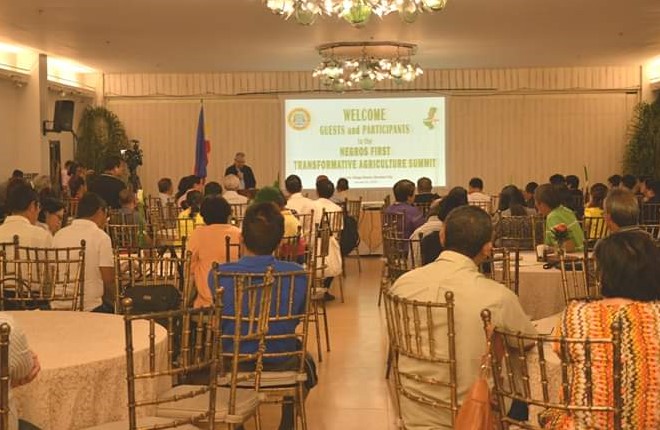
The Province of Negros Occidental conducted the Negros First Transformative Agriculture Summit in Talisay City on Thursday (Jan. 31, 2019) to craft a five-year agriculture development plan amid the woes faced by the sugar industry.
Photo courtesy of Negros Occidental Capitol PIO

“These are the areas where we can work on,” she added.

Diversification is one of the main components of the five-year agriculture development plan crafted during the summit held at Nature’s Village Resort in Talisay City.

The province plans to reduce by 30,000 hectares its total land area of about 189,000 hectares devoted to sugarcane, and diversify into other crops, such as yellow corn, rice, high-value crops (HVC), and tropical fruits.

Former governor Rafael Coscolluela, provincial consultant on investment promotions, export, and trade development, said the biggest area for diversification is intended for yellow corn at 15,000 hectares.

Yellow corn is needed for livestock and poultry sector of the province.

The remaining 15,000 hectares will be equally converted to rice, HVC with integrated poultry and livestock, and tropical fruits or 5,000 hectares for each crop.

Coscoluella said the conversion area of 30,000 hectares is just a target, and the provincial government can still be ambitious if there is a potential for other crops.

“Ultimately, the deciding factor is profitability so we will go where there is higher profit,” he said, adding that the major challenge is how to encourage planters and farmers to diversify.

Recoter said that diversification would not mean “forgetting” the sugar industry, considered as the lifeblood of the province, which is the country’s top sugar producer.

She said Negros Occidental will still be a sugar-producing province.

Western Visayas, mostly Negros Occidental, contributes 55 percent to the Philippines’ PHP96-billion sugar industry.

The DA official also said the Sugar Regulatory Administration has programs on increasing the yield despite the reduction of areas devoted to sugarcane.

Meanwhile, the Department of Agrarian Reform (DAR)-6 is also banking on the diversification plan to prepare the agrarian reform beneficiaries (ARBs) on the possible adverse effects of the proposed sugar import liberalization.

DAR-6 Regional Director Stephen Leonidas said on the sidelines of the summit that under their agency’s effort alone, there are about 100 hectares of agrarian areas in the province utilized for organic farming, vegetable, rice and corn farming, and livestock growing.

Leonidas said the ARBs are gradually shifting to other crops so they will not be adversely affected.

“We are preparing for that whatever effects, negative or positive, to our ARBs,” he said.

Negros Occidental has larger ARB-covered areas compared to other provinces in the country.

Leonidas said the sugar import deregulation would impact both big planters and small farmers, including ARBs.

An open-market importation would result in competition among local and foreign products, he added.

“Given the lower price of local sugar, it would be difficult for ARBs to compete as they are not yet ready,” the DAR official said.

 In Negros Occidental, the average area for ARBs is one to 1.5 hectares per farmer. There are about 74,000 ARBs in the southern part of the province alone. (PNA)

Source: http://www.pna.gov.ph/articles/1060734

NegOcc, Bacolod visitors boost Region 6 tourist arrivals in 2018

BACOLOD CITY — Visitors in Negros Occidental, including its capital Bacolod City, have boosted tourist arrivals in Western Visayas (Region 6), amid the six-month closure of Boracay Island in Aklan last year.

Department of Tourism (DOT) 6 Director Helen Catalbas said Thursday they have yet to release the final figures, but initial records showed the combined tourist arrivals of Negros Occidental and Bacolod City would surpass Aklan’s for 2018.

A decline of about one million tourists is expected in the region’s top island-destination due to the government’s rehabilitation efforts.

“We can no longer bring back the losses in tourist arrivals of Boracay,” said Catalbas, who was among the officials who attended the Negros First Transformative Agriculture Summit in Talisay City.

She said the slump in the tourist arrivals of Boracay Island does not necessarily mean that figures for the whole region will also decline.

In 2017, Negros Occidental and Bacolod City posted the second highest number of tourists in Western Visayas.

Based on DOT-6 figures, 5.85 million tourists visited the region in 2017, and Negros Occidental and Bacolod City’s combined tourist arrivals of 1.72 million accounted for 29 percent.

Negros Occidental alone had 892,199 arrivals, including 856,511 domestic visitors and 35,688 foreign tourists.

Bacolod registered 831,687 tourists, of whom 756,835 were domestic and 74,852 foreign guests.

Also in 2017, Aklan, which hosts Boracay Island, remained the region’s top tourist destination with about 2.22 million arrivals or 38 percent.

Iloilo province, including its capital Iloilo City, ranked third with almost 1.39 million visitors or 23 percent.

Capiz came in fourth with 229,195 tourists followed by Antique and Guimaras with 162,925 and 128,256, respectively.

Aklan is expected to recover this year, given its newly-rehabilitated island-destination considered to be more attractive to tourists. (PNA)

Source: http://www.pna.gov.ph/articles/1060724